 Chrissy Newbury
Then we must strive to overcome the barrier... open our hearts to the cosmos... and to each other. Dan Hettmannsperger III
"Yes.....my love.....who is one with all vines, flowers, forests and live....."- Dan Hettmannsperger III
*lifeExtending the metaphor....I wonder, so you think Christians and other monotheists are those poor wretched merged with the wall....who imagine they've found supreme truth and instead have a comforting delusion...like one who might mistake the skin of an apple for the apple as a whole?*like - Dan Hettmannsperger III
Because in the comics....those who merge with the Source Wall are trapped....stuck as it were....and Monotheists seem "trapped" within the cage of their belief-system....It seems to fit doesn't it? - Chrissy Newbury
I certainly does. It's such a simple, yet true, way of looking at it. It just seems so obvious...! - Dan Hettmannsperger III
I think....and I know you agree with me on this....that this is why it is important for us to be courageous and questions our assumptions.I certainly encourage you in your private moments to do so with the Dhama.*Dharma.I have for years.<<wonders what you're thinking... - Chrissy Newbury
Yes. At the moment I am learning so much. But it's a bit of a jumble in my head. I need to take a step back maybe and try to look at things individually. That's why I think it's important for me to talk to you 'in person'. You have a way of explaining things that makes it all so simple... - Chrissy Newbury
You do wonderfully!
Not specifically. I just need to get thing straight in my head. Like I confuse Dharma with Dukkha.. and Samsara. - Dan Hettmannsperger III
Dukkha=First Noble Truth.The word Dharma has two meanings depending on context.Most of the time just means "The Teachings of the Buddha".Less often but no less important it means "Truth".What kind of truth?A: That which is SELF-EVIDENT. - Dan Hettmannsperger III
Correct."God" is a metaphysical speculation....and ALL metaphysical speculations are NOTconsidered Dharma."Heaven" is not a Dharma."Soul" is not a Dharma."Angels" are not Dharma. - Dan Hettmannsperger III
....and lastly....Samsara is the phenomenal world as perceived by those who lack insight....this is the Ocean of Birth and Death.Ever heard that expression "the World I what you make it?" - Chrissy Newbury
I do agree with it. You can't expect the world to come to you, you must at the very least meet it half way. - Dan Hettmannsperger III
Those who see the world as they WANT IT TO BE are really living in Samsara.....To see true-reality-as-it-is...that is Nirvana. - Chrissy Newbury
“We are what we think. All that we are arises with our thoughts. With our thoughts, we make the world.” - Dan Hettmannsperger III
When I sense my own discontent....my own bitterness at life....it's dark tendrils wrapping around my psyche in unguarded moments I know that I am being dragged down into Samsara....When I see large numbers of people like that...it makes me concerned.The Mass-deluded.... - Chrissy Newbury
Yes... the world is being pulled down by their own bitter and twisted demons... I feel that all the time. - Chrissy Newbury
Until everyone individually can recognise those demons as being 'the self'.. and deal with them, there is no ready solution... - Dan Hettmannsperger III
Bodhidharma felt the only way to save the world was to sit and stare at a stone wall inside a cave for 9 years.Why?You just answered the question. - Chrissy Newbury
My headache is passing. I feel... 'smiley'. And light. Like a weight has been lifted.
Monday, 1 April 2013


Sunday, 31 March 2013
Five Buddhist techniques for practising patience
The Buddhist Practice of Patience
In Buddhism, the word khanti (Ksanti in Sanskrit), which is translated as ‘patience’ is also the word that gets translated as ‘tolerance’. It’s not just a grin-and-bear-it thing. It’s essentially the faculty that allows a person to stay in a positive mental and emotional state when faced with unpleasant circumstances.
The ancient Buddhist art of staying happy when things suck big time.
It is one of the 6 ‘perfections’ (‘paramitas’) that one must develop in order to be a bodhisattva (which is a highly-realised being in the later ‘Mahayana’ Buddhist tradition). So training in patience is pretty key.
As well as developing patience in general, the Buddha specifically mentioned 3 things that we need to try to cultivate patience with – I guess because they’re the things that tend to annoy most people:
1. Illness
2. The weather
3. Other people
2. The weather
3. Other people
That list always makes me chuckle. I would add unpleasant smells to that list. And bad music blasting out of headphones in train carriages. But I suppose they didn’t have headphones in ancient India (or train carriages).

Here are some tips, mostly from Santideva’s Bodhicaryavatara – ‘Guide to the Bodhisattva’s Way of Life’. I’m writing this on the train and from memory, but hopefully it’s pretty accurate. Feel free to correct any mistakes!
- Don’t try to get everything in your world right. Try to get your mind right. Santideva says ‘Why try to cover the entire world in leather, when simply covering the soles of your own feet will do the job just as well?’
- Try to remember that, even though the person in front of you is being an asshole, you are also contributing something to your current feeling (and there are a bunch of other factors that you’re not taking account of too). How tired you are, the weather, the fact that you’re late, perhaps you woke up 10 minutes late and now have to rush. It’s all part of the web of conditions that led to you currently feeling like this.We tend to lay a whole bunch of blame on people, when often a bunch of the problem is dues to non-human causes and conditions. But you can’t shout at lateness, whereas you can shout at a person.
- Remember that the person has a whole story that you aren't aware of. If you knew it, maybe you’d give them a break?
- Although in your world you are the subject and they are the object, in their world it’s the other way round. We tend to see ourselves (emotionally, if not philosophically) as the centre of the universe. We are the constant, the star of the show. Everyone else is a bit part – passing through. But you’re just a bit part in their life too. When you get your head around that, their lack of consideration becomes a little more understandable.
- Your enemy is your greatest teacher. You are fortunate they exist. That might seem strange, but think about it. When nothing and no one is rubbing you up the wrong way, you just drift through life, learning very little. We've all met people who are the result of this kind of ‘good fortune’!
We reflect most when something’s not right and we have to work out a way to deal with it. Learning to stay positive when things aren’t right is the big one. When you’ve cracked it, life is a piece of cake!

Understanding the Buddha's Teaching
Chapter Seven
Turnings of the Dharma Wheel
It is said there are 84,000 dharma gates, which is a poetic way of saying there are infinite ways to enter the practice of the Buddha dharma. And over the centuries Buddhism has developed an enormous diversity of schools and practices. One way to understand how this diversity came about is by understanding the three turnings of the dharma wheel.
The dharma wheel, usually depicted as a wheel with eight spokes for the Eightfold Path, is a symbol of Buddhism and of the Buddha dharma. Turning the dharma wheel, or setting it in motion, is a poetic way to describe the Buddha's teaching of the dharma.
In Mahayana Buddhism, it is said the Buddha turned the dharma wheel three times. These three turnings represent three significant events in Buddhist history.

In the Pali version, the Buddha told the five monks:
"As long as the insight and the understanding of these Four Noble Truths in their threes stages and twelve aspects, just as they are, had not been fully realised, I could not say that in this world with its gods, maras, brahamas, recluses, brahmans, and men, someone had realised the highest awakening...."
In the Chinese version of the sutra, the Buddha said:
"Monks, the experience of the three turnings of the wheel with regard to each of the Four Truths gives rise to eyes of awakened understanding, and therefore I declare before gods, spirits, shramanas, and brahmans of all times that I have destroyed all afflictions and reached full awakening."
The Wheel of the Dharma was put in motion 12 times - three for each of the Four Noble Truths. To understand them, not just intellectually but experientially, we have to practice the 12 turnings of the wheel.
1. Recognition. We sense something is wrong, but we can't say exactly what. We try to escape, but cannot. We try to deny our suffering, but it persists. The Buddha said, "To suffer and not know that we are suffering is more painful than the burden endured by a mule carrying an unimaginably heavy load."
We have to recognise that we are suffering & then figure out whether it is physical, psychological, or physiological. We need to identify it, like a doctor identifying a sickness. ie. "If I press here, does it hurt?" and we say, " Yes, this is my suffering." The wounds in our heart become the object of our meditating. We show them to the Buddha, and thus we show them to ourselves. Our suffering is us - we need to treat it with kindness. Embrace our fear, hatred, anguish and anger.
2. Encouragement. Now we can take the time to look deeply into our pain in order to understand its true nature - its causes. Be determined to understand our illness. Our suffering - depression, illness, a difficult relationship or fear - needs to be understood. Practice sitting and walking meditation and ask for guidance and support from friends, and our teacher. As we do this, the cause of our suffering becomes knowable. At this stage, our practice can still be 'set back' (ashrava).
3. Realisation. "This suffering has been understood." Now we have stopped running away from our pain, we can now call our suffering by its special name and identify all of its traits. This alone brings us happiness, joy "without setbacks" (anashrava). Even after we have identified we still continue to create suffering for ourselves, like pouring gasoline on the fire through our words, thoughts, and deeds and often don't even realise it.
* Four Kinds of nutriments that lead to our happiness or our suffering.
a. Edible Food. Much suffering comes from not eating mindfully.
b. Sense Impressions. Eyes, ears, nose, tongue, body, and mind.
c. Volition, intention, or will. The desire in us to obtain whatever we want.
d. Consciousness. All the seeds sown by our past actions and those of our family and society.

Right Mindfulness traditionally is the seventh part of the Eightfold Path of Buddhism, but that doesn't mean it is seventh in importance. Each part of the path supports the other seven parts, and so they should be thought of as connected in a circle or woven into a web rather than stacked as if in an order of progression.
Zen teacher Thich Nhat Hanh says that Right Mindfulness is at the heart of the Buddha's teaching. "When Right Mindfulness is present, the Four Noble Truths and the other seven elements of the Eightfold Path are also present." (The Heart of the Buddha's Teaching, p. 59)
What Is Mindfulness?
The Pali word for "mindfulness" is sati (in Sanskrit, smriti). Sati can also mean "retention," "recollection," or "alertness." Mindfulness is a whole-body-and-mind awareness of the present moment. To be mindful is to be fully present, not lost in daydreams, anticipation, indulgences, or worry.
Mindfulness also means observing and releasing habits of mind that maintain the illusion of a separate self. This includes dropping the mental habit of judging everything according to whether we like it or not. Being fully mindful means being fully attentive to everything as-it-is, not filtering everything through our subjective opinions.
Why Mindfulness Is Important
It's important to understand Buddhism as a discipline or process rather than as a belief system. The Buddha did not teach doctrines about enlightenment, but rather taught people how to realize enlightenment themselves. And the way we realize enlightenment is through direct experience. It is through mindfulness that we experience directly, with no mental filters or psychological barriers between us and what is experienced.
The Ven. Henepola Gunaratana, a Theravada Buddhist monk and teacher, explains in the bookVoices of Insight (edited by Sharon Salzberg) that mindfulness is essential to help us see beyond symbols and concepts. "Mindfulness is pre-symbolic. It is not shackled to logic," he says. "The actual experience lies beyond the words and above the symbols."
Mindfulness and Meditation
The sixth, seventh and eighth parts of the Eightfold Path -- Right Effort, Right Mindfulness, and Right Concentration -- together are the mental development needed to release us from suffering.
Meditation is practiced in many schools of Buddhism as part of mental development. The Sanskrit word for meditation, bhavana, means "mental culture," and all forms of Buddhist meditation involve mindfulness. In particular, shamatha ("peaceful dwelling") meditation develops mindfulness; people sitting in shamatha train themselves to stay alert to the present moment, observing and then releasing thoughts instead of chasing them.Satipatthana vipassana meditation is a similar practice found in Theravada Buddhism that is primarily about developing mindfulness.
In recent years there has been a growing interest in mindfulness meditation as part of psychotherapy. Some psychotherapists find that mindfulness meditation as an adjunct to counseling and other treatments can help troubled people learn to release negative emotions and thought habits.
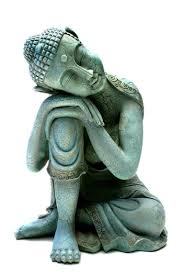
Four Frames of Reference
The Buddha said there are four frames of reference in mindfulness:
- Mindfulness of body (kayasati).
- Mindfulness of feelings or sensations (vedanasati).
- Mindfulness of mind or mental processes (cittasati).
- Mindfulness of mental objects or qualities (dhammasati).
Have you ever suddenly just noticed that you had a headache, or that your hands were cold, and realized you'd been feeling these things for a while but weren't paying attention? Mindfulness of body is just the opposite of that; being fully aware of your body, your extremities, your bones, your muscles. And the same thing goes for the other frames of reference -- being fully aware of sensations, aware of your mental processes, aware of the phenomena all around you.
The teachings of the Five Skandhas are related to this, and are worth reviewing as you begin to work with mindfulness.
Three Fundamental Activities
The Venerable Gunaratana says mindfulness comprises three fundamental activities.
1. Mindfulness reminds us of what we are supposed to be doing. If we are sitting in meditation, it brings us back to the focus of meditation. If we are washing dishes, it reminds us to pay full attention to washing the dishes.
2. In mindfulness, we see things as they really are. The Venerable Gunaratana writes that our thoughts have a way of pasting over reality, and concepts and ideas distort what we experience.
3. Mindfulness sees the true nature of phenomena. In particular, through mindfulness we directly see the three characteristics or marks of existence -- it is imperfect, temporary and egoless.
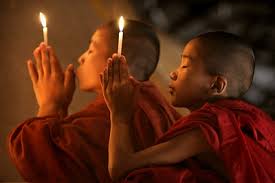
Practicing Mindfulness
Changing the mental habits and conditioning of a lifetime is not easy. And this training is not something that only happens during meditation, but throughout the day.
If you have a daily chanting practice, chanting in a focused, fully attentive way is mindfulness training. It can also be helpful to choose a particular activity such as preparing a meal, cleaning the floors, or taking a walk, and make an effort to be fully mindful of the task as you perform it. In time you will find yourself paying more attention to everything.
Zen teachers say that if you miss the moment, you miss your life. How much of our lives have we missed? Be mindful! But be careful! First there has to be genuine insight, genuine freedom.

In the Pali version, the Buddha told the five monks:
"As long as the insight and the understanding of these Four Noble Truths in their threes stages and twelve aspects, just as they are, had not been fully realised, I could not say that in this world with its gods, maras, brahamas, recluses, brahmans, and men, someone had realised the highest awakening...."
In the Chinese version of the sutra, the Buddha said:
"Monks, the experience of the three turnings of the wheel with regard to each of the Four Truths gives rise to eyes of awakened understanding, and therefore I declare before gods, spirits, shramanas, and brahmans of all times that I have destroyed all afflictions and reached full awakening."
The Wheel of the Dharma was put in motion 12 times - three for each of the Four Noble Truths. To understand them, not just intellectually but experientially, we have to practice the 12 turnings of the wheel.
We have to recognise that we are suffering & then figure out whether it is physical, psychological, or physiological. We need to identify it, like a doctor identifying a sickness. ie. "If I press here, does it hurt?" and we say, " Yes, this is my suffering." The wounds in our heart become the object of our meditating. We show them to the Buddha, and thus we show them to ourselves. Our suffering is us - we need to treat it with kindness. Embrace our fear, hatred, anguish and anger.
2. Encouragement. Now we can take the time to look deeply into our pain in order to understand its true nature - its causes. Be determined to understand our illness. Our suffering - depression, illness, a difficult relationship or fear - needs to be understood. Practice sitting and walking meditation and ask for guidance and support from friends, and our teacher. As we do this, the cause of our suffering becomes knowable. At this stage, our practice can still be 'set back' (ashrava).
3. Realisation. "This suffering has been understood." Now we have stopped running away from our pain, we can now call our suffering by its special name and identify all of its traits. This alone brings us happiness, joy "without setbacks" (anashrava). Even after we have identified we still continue to create suffering for ourselves, like pouring gasoline on the fire through our words, thoughts, and deeds and often don't even realise it.
* Four Kinds of nutriments that lead to our happiness or our suffering.
a. Edible Food. Much suffering comes from not eating mindfully.
b. Sense Impressions. Eyes, ears, nose, tongue, body, and mind.
c. Volition, intention, or will. The desire in us to obtain whatever we want.
d. Consciousness. All the seeds sown by our past actions and those of our family and society.
Right Mindfulness traditionally is the seventh part of the Eightfold Path of Buddhism, but that doesn't mean it is seventh in importance. Each part of the path supports the other seven parts, and so they should be thought of as connected in a circle or woven into a web rather than stacked as if in an order of progression.
Zen teacher Thich Nhat Hanh says that Right Mindfulness is at the heart of the Buddha's teaching. "When Right Mindfulness is present, the Four Noble Truths and the other seven elements of the Eightfold Path are also present." (The Heart of the Buddha's Teaching, p. 59)
What Is Mindfulness?
The Pali word for "mindfulness" is sati (in Sanskrit, smriti). Sati can also mean "retention," "recollection," or "alertness." Mindfulness is a whole-body-and-mind awareness of the present moment. To be mindful is to be fully present, not lost in daydreams, anticipation, indulgences, or worry.
Mindfulness also means observing and releasing habits of mind that maintain the illusion of a separate self. This includes dropping the mental habit of judging everything according to whether we like it or not. Being fully mindful means being fully attentive to everything as-it-is, not filtering everything through our subjective opinions.
Why Mindfulness Is Important
It's important to understand Buddhism as a discipline or process rather than as a belief system. The Buddha did not teach doctrines about enlightenment, but rather taught people how to realize enlightenment themselves. And the way we realize enlightenment is through direct experience. It is through mindfulness that we experience directly, with no mental filters or psychological barriers between us and what is experienced.
The Ven. Henepola Gunaratana, a Theravada Buddhist monk and teacher, explains in the bookVoices of Insight (edited by Sharon Salzberg) that mindfulness is essential to help us see beyond symbols and concepts. "Mindfulness is pre-symbolic. It is not shackled to logic," he says. "The actual experience lies beyond the words and above the symbols."
Mindfulness and Meditation
The sixth, seventh and eighth parts of the Eightfold Path -- Right Effort, Right Mindfulness, and Right Concentration -- together are the mental development needed to release us from suffering.
Meditation is practiced in many schools of Buddhism as part of mental development. The Sanskrit word for meditation, bhavana, means "mental culture," and all forms of Buddhist meditation involve mindfulness. In particular, shamatha ("peaceful dwelling") meditation develops mindfulness; people sitting in shamatha train themselves to stay alert to the present moment, observing and then releasing thoughts instead of chasing them.Satipatthana vipassana meditation is a similar practice found in Theravada Buddhism that is primarily about developing mindfulness.
In recent years there has been a growing interest in mindfulness meditation as part of psychotherapy. Some psychotherapists find that mindfulness meditation as an adjunct to counseling and other treatments can help troubled people learn to release negative emotions and thought habits.
Four Frames of Reference
The Buddha said there are four frames of reference in mindfulness:
- Mindfulness of body (kayasati).
- Mindfulness of feelings or sensations (vedanasati).
- Mindfulness of mind or mental processes (cittasati).
- Mindfulness of mental objects or qualities (dhammasati).
Have you ever suddenly just noticed that you had a headache, or that your hands were cold, and realized you'd been feeling these things for a while but weren't paying attention? Mindfulness of body is just the opposite of that; being fully aware of your body, your extremities, your bones, your muscles. And the same thing goes for the other frames of reference -- being fully aware of sensations, aware of your mental processes, aware of the phenomena all around you.
The teachings of the Five Skandhas are related to this, and are worth reviewing as you begin to work with mindfulness.
Three Fundamental Activities
The Venerable Gunaratana says mindfulness comprises three fundamental activities.
1. Mindfulness reminds us of what we are supposed to be doing. If we are sitting in meditation, it brings us back to the focus of meditation. If we are washing dishes, it reminds us to pay full attention to washing the dishes.
2. In mindfulness, we see things as they really are. The Venerable Gunaratana writes that our thoughts have a way of pasting over reality, and concepts and ideas distort what we experience.
3. Mindfulness sees the true nature of phenomena. In particular, through mindfulness we directly see the three characteristics or marks of existence -- it is imperfect, temporary and egoless.
Practicing Mindfulness
Changing the mental habits and conditioning of a lifetime is not easy. And this training is not something that only happens during meditation, but throughout the day.
If you have a daily chanting practice, chanting in a focused, fully attentive way is mindfulness training. It can also be helpful to choose a particular activity such as preparing a meal, cleaning the floors, or taking a walk, and make an effort to be fully mindful of the task as you perform it. In time you will find yourself paying more attention to everything.
Zen teachers say that if you miss the moment, you miss your life. How much of our lives have we missed? Be mindful! But be careful! First there has to be genuine insight, genuine freedom.
Saturday, 30 March 2013
What the Buddha says about jealousy.
I recently found myself in a position of feeling sudden acute jealousy with regard to someone I love. This is not my normal way of being.
That is why I want to know what the Buddha's feelings are with regard to jealousy.
USING JEALOUSY AS A GIFT
There’s a lesson here for all of us. When you feel jealous, instead of identifying with that feeling or beating yourself up for feeling it, let it serve as an important message.
Here’s how to do that:
1. When you experience jealousy, turn your focus from outward to inward.
This is hard, this is big, and this is where transformation begins.
2. Ask, what part of me is having trouble witnessing the x (success, brilliance, boldness, popularity, beauty, wealth, etc.) of another person?
Connect to that part. Focus in on the discomfort. Shine the light there and explore it.
3. Ask yourself: What message does that part of me have to share?
What does that part want for me? What does it want to create in my own life? What does it feel hurt about, prevented from doing, stuck around? Reflect on these questions by journaling about them or exploring them in meditation.
4. Feel the feelings fully.
Speak them. Process them. You can share them with the person you are jealous of—if that feels right in the relationship. Though I didn’t do this with Kayla because I was a scaredy-cat, I’ve done it with others since and it goes a long way to immediately diffuse the feelings of jealousy.
Once you’ve shone a light on it, it can’t run you in the same way. Or, share with another supportive listener, journal, or process the feelings by sitting quietly with them and feeling the sensations of them in your body. We forget all the time in our doing-focused culture that when it comes to feelings, just feeling them fully causes them to shift. It really does!
5. Explore: What am I willing to do to get back on track with myself in my life?
What would I need to be doing in my own life to be completely at home with–delighted by–this person’s glory? Your answers here point you towards your own glory.
6. Finally, consider: What do I need to do, in order to be the person I want to be in this relationship?
Steps 1-5 are an important part of this. You may also want to put in place some boundaries for yourself like “no teasing this person” or “no comments” on the thing you are jealous of. Sometimes, it’s a good idea to take a step back from the relationship until you can be the source of support they deserve.
When you give yourself full permission to shine, to try, to experiment, to fail, jealousy of others subsides. When your stand for your own dreams, and do the hard and brave things required to make them happen, you won’t feel that twinge of jealousy in the presence of others going after theirs.
And when you do feel jealous? Treat it as a powerful messenger. Jealousy shows you just where you need to go next on your own journey.
From readers:
"The goal of Buddhist practice is to remove suffering from ourselves and all other sentient beings. I recommend reading a text called 37 Practices of Bodhisattvas. It helps to explain some of the finer points but I'll try and give you some helpful advice:
We practice non-attachment (everything is constantly changing therefore it causes us pain to hold on to 'ideas' about ourselves and what makes us who we are). We realize that by acknowledging the feelings we take our first steps toward observing the feelings and how they contribute to our suffering and the suffering of others. This is not at all easy but we practice not 'getting involved' with the feeling(s). We recognize that jealousy and sadness are not a natural state for us to be in, human beings were created for joy.
I would do a few of the following things to help:
Practice compassion with yourself (if you cannot have compassion for yourself then it is difficult to have for other people).
Practice kindheartedness toward the person who has hurt you. It doesn't change what they did or did not do but it helps put things in a different perspective. It changes negative feelings to more positive. Practice compassion as well.
Remove yourself from potentially damaging situations so that you can keep a clear head. When you suffer it increases the suffering of everyone else in the universe, it's a beautiful two sides of the coin idea. When you experience joy, all beings share in your joy.
Meditate on the joy of being born as a human being. (this is the first practice in the 37 practices.......get a book about it, it is helpful).
The antidote for anger is meditating on love.
I say 'practice' because we don't do anything automatically. We like to think we do but we do have to practice in order for an attitude to become part of us. It's also a more forgiving way to look at yourself and others.
I wish you well.
Namaste"
"A buddhist-in-training sees attachments as 'paths' to suffering because they feel bound to them. A buddhist sees the same actions and simply chooses when to be attached and when not to be attached.
A buddhist does not deny their own feelings for others unless, of course, the buddhist chooses to deny the feelings of themselves for others. Exact same situation; one feels helpless, one feels empowered.
Do you feel helpless when you are hungry? Do you feel helpless when you are thirsty? Who is holding onto this person? Why are you holding onto this person? When you understand the question, then you will know the answer."
"You have just realized the First Noble Truth of the Buddha's Teaching:
.....separation from the beloved is suffering;not to get what one desires is suffering;...
By realizing The First Noble Truth,you are already one of the 8 noble person(ariya) travelling on the path to Enlightenment.
The answer to second part of your question is in The Fourth Noble Truth:The Truth of the Path Leading to the Extinction of Suffering.
This is simply the Noble Eightfold Path consisting of:
Right Understanding,Right Thought..........Wisdom aspect
Right Speech,Right Action,Right Livelihood.....Morality aspect
Right Effort,Right Mindfulness,Right Concentration...Concentration aspect
The above Noble Threefold Training will overcome all suffering and leads to Enlightenment.You will need a good teacher to guide you.
May you gained Enlightenment in this life.
Metta to all."
Understanding The Buddha's Teaching
Chapter Six
Stopping, Calming, Resting, Healing.
There is an old Zen story about a man riding a horse that is galloping very quickly. Seeing him, another man asks, “Where are you going in such a hurry?” To which the man replies, “I have no idea. Ask the horse!”
That is also the story of Buddhism. We are riding a horse, and we don't know where we are going and we can't stop. The horse is our habit energy pulling us along and we are powerless. We are always running - it's a habit. We struggle, even when asleep. We are at war within ourselves and that can lead to a war with others.

We need to learn the Art of Stopping; our thinking, habit energies, forgetfulness, the strong emotions that rule us. When an emotion rushes through us like a storm, we can have no peace. We end up in a state of agitation. How can we stop our fear, despair, anger, and craving? By practicing mindful breathing, walking, smiling and deep looking. Mindfulness and deeply touching the moment can lead to understanding, acceptance, love and the desire to relieve suffering and bring joy.
But our habit energies can be strong. We say and do things that we regret, making ourselves and others suffer. We have to learn to recognise our habit energies..."Hello my habit energy, I know you are there!!" Smiling at it makes it lose its strength. Mindfulness is the what helps us recognise habit energy and not let it rule us.
Forgetfulness is the opposite. We drink tea, but we do not know we are drinking tea. We sit with someone we love but fail to see that they are there. We walk, but we don't realise we are walking - we are somewhere else thinking about other things. The horse of our habit energy is carrying us along and we are captive. We need to stop our horse and reclaim our freedom. The light of mindfulness will vanquish the darkness of forgetfulness.
Shamatha - to stop. The first step of meditation.
The second step is calming. We need to embrace the the ability to refrain from acting in dangerous situations. Learn the art of breathing in and out, stop our activity and calm our emotions. Be solid and stable like an oak tree in a storm. The Buddha taught many ways to help us calm our bodies and minds and look deeply into them.
The Five Stages:
- Recognition. If we are angry, we say, "I know that anger is in me."
- Acceptance. When we are angry we do not deny it. We accept it.
- Embracing. We hold our anger like a mother embracing her crying child. Our mindfulness embraces our emotion and this can calm our anger and ourselves.
- Looking deeply. When we are calm enough, we can look deeply to understand what has started this anger in us - what is causing the child's distress.
- Insight. Looking deeply to understand what has caused our anger, the child to cry. Perhaps it has a rash or is hungry. Our anger was triggered when a friend spoke harshly and then we remember that his father has recently died. We reflect like this until we have insight into what has caused our suffering. With insight, we know what to do and what not to do to change the situation.
After calming, the third step after shamatha is resting.
Someone standing near a river throws a pebble in the air and it falls into the river. The pebble allows itsellf to to sink slowly and effortlessly to the river bed. Once there, it continues to rest, allowing the water to pass by it.
When we practice sitting meditation, we can allow ourselves to rest just like the pebble, to sink naturally into the position of sitting - resting effortlessly. WE have to learn this art of resting, in mind and body. If we have wounds in our body or mind, rest will heal them.
Someone standing near a river throws a pebble in the air and it falls into the river. The pebble allows itsellf to to sink slowly and effortlessly to the river bed. Once there, it continues to rest, allowing the water to pass by it.
When we practice sitting meditation, we can allow ourselves to rest just like the pebble, to sink naturally into the position of sitting - resting effortlessly. WE have to learn this art of resting, in mind and body. If we have wounds in our body or mind, rest will heal them.
Calming allows us to rest and rest is the for-runner of healing. Animals in the forest who are wounded find a place to lie down and rest - they do not eat or move. They just rest in order to get the healing they need. Humans who get sick just worry!! We look to doctors and medicine, but we don't stop. Even on vacation, we don't rest, and we come back more tired than before. We have to learn to rest; sitting or walking meditation are good. Meditation does not have to be hard work. Allow your body and mind to rest like the animal in the forest. Do not struggle. Even reading this is resting, in a joyful and restful way.
The Buddha said, "My Dharma is the practice of non-practice. " Don't tire yourself out. Give your emotions and body and consciousness a chance to rest. That way we have a chance to heal ourselves.
The Buddha said, "My Dharma is the practice of non-practice. " Don't tire yourself out. Give your emotions and body and consciousness a chance to rest. That way we have a chance to heal ourselves.
Stopping, calming and resting are preconditions for healing. They help us avoid destruction. The world needs healing.
Subscribe to:
Posts (Atom)